Uneven AC cooling in a Boca Raton home: what to check safely
When the thermostat is satisfied but a bedroom stays warm, start by separating a room-specific airflow problem from a whole-home cooling problem. These observations help you describe the issue without dismantling equipment or guessing at a repair.
Call (561) 981-8666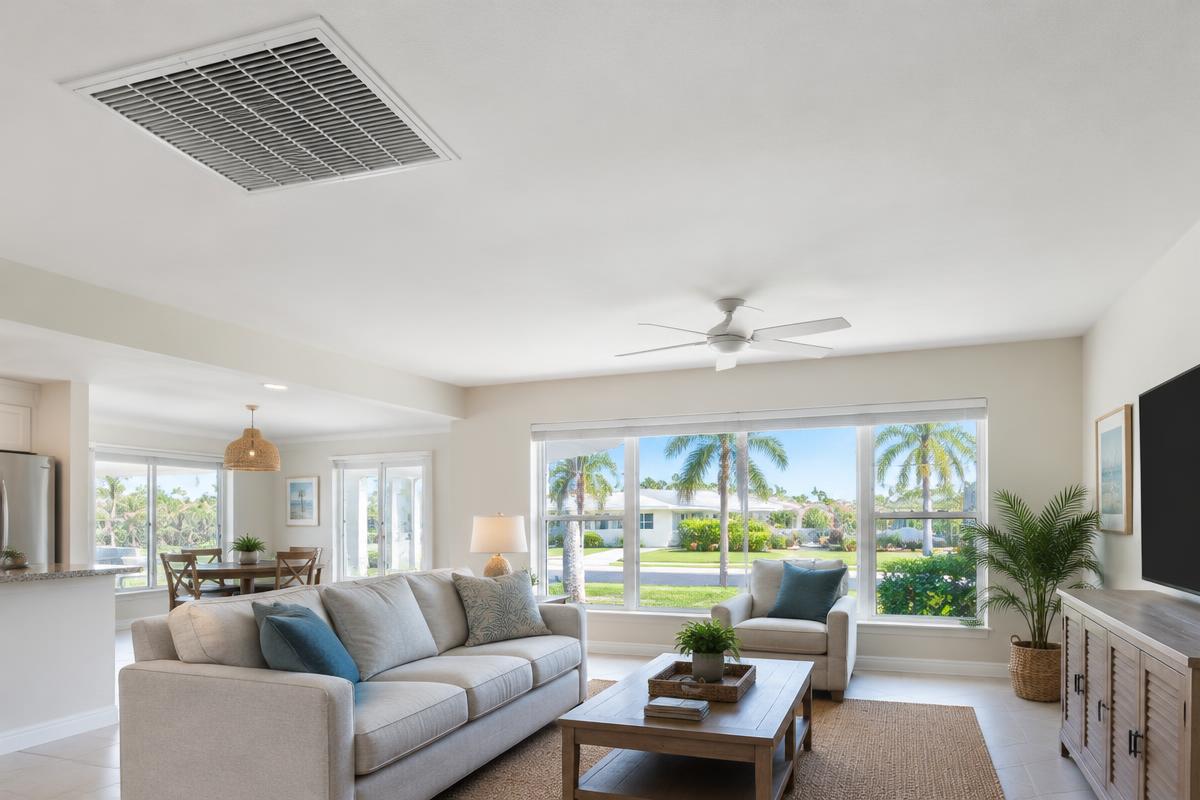
Illustrative image, not an AZ customer property.
Five checks before requesting diagnostics
1. Compare rooms before changing settings
Note which room feels warmer, the time of day, the thermostat setting and whether the system is still running. Compare rooms under similar conditions with a room thermometer if available. Afternoon sun through west-facing glass can add heat even when a register has normal airflow; close blinds and note whether that changes the pattern. A hot room alone does not prove a refrigerant problem.
2. Check the thermostat mode and schedule
Confirm COOL mode and review programmed setbacks or smart-thermostat schedules. Use the normal fan setting recommended by your equipment instructions; continuous fan operation can affect humidity on some systems. Keep lamps and other heat sources away from the thermostat. Do not move the thermostat, alter wiring or repeatedly lower the setpoint to force more cooling.
3. Inspect only the accessible filter
Turn cooling off at the thermostat before checking a filter in a normal homeowner-accessible slot. Follow the equipment instructions for size, airflow-arrow direction and replacement interval. Replace a dirty disposable filter with the specified type; do not stack filters, run without one or assume a higher-rated filter suits your blower. If reaching it requires opening a service panel, leave it to a technician.
4. Keep supply registers and returns clear
Move furniture, curtains and rugs away from grilles. Check that adjustable supply registers are open without removing them. Do not close vents in comfortable rooms to push air elsewhere; that can increase duct pressure and worsen system performance. Note whether the warm room changes when its door is open, which can suggest a return-air pathway issue rather than a cooling-equipment failure.
5. Observe duct clues without entering the attic
From occupied rooms, listen for new whistling and compare airflow by holding a hand near, not inside, each register. Report a room that became uncomfortable after renovation, an inaccessible return or visible damage to exposed ductwork. Do not climb into an attic, cut ducts, adjust hidden dampers or tape over grilles. A technician can assess duct leakage, insulation, blower airflow and balancing.
Warning signs: stop testing and get help
- Ice on visible refrigerant tubing, water leaking near the air handler or a suddenly stopped system: turn cooling off at the thermostat if safe and arrange an assessment. Do not chip ice, bypass a float switch or keep restarting the system.
- A burning smell, sparking or repeated breaker trips: stop using the system. Do not open electrical panels or repeatedly reset a breaker. For smoke or an immediate fire hazard, leave the area and contact emergency services.
- Persistent weak airflow, unusual equipment noise or warm air throughout the home despite basic checks: request licensed diagnosis rather than adding refrigerant or changing components yourself.
What to tell a licensed HVAC technician
Share the affected rooms, when the difference occurs, thermostat mode and setting, filter size and replacement history, any recent remodeling, and whether opening a room door changes comfort. Ask whether the assessment includes return-air pathways, duct condition, blower airflow and thermostat operation. Refrigerant, electrical and equipment-sizing checks belong to a licensed technician; room symptoms do not establish the cause.
For a Boca Raton condo, confirm who can authorize access to shared or restricted equipment. Do not adjust common-building controls. Provide your city, ZIP code and access arrangements when requesting service.
- Boca Raton plumbing and AC service
- AC diagnostics, repair and replacement
- AC maintenance details
- Palm Beach County covered-community guide
Florida HVAC License #CMC1251451. Boca Raton is a service area, not a claim of a staffed local office.
Request Service